
 Save Pin
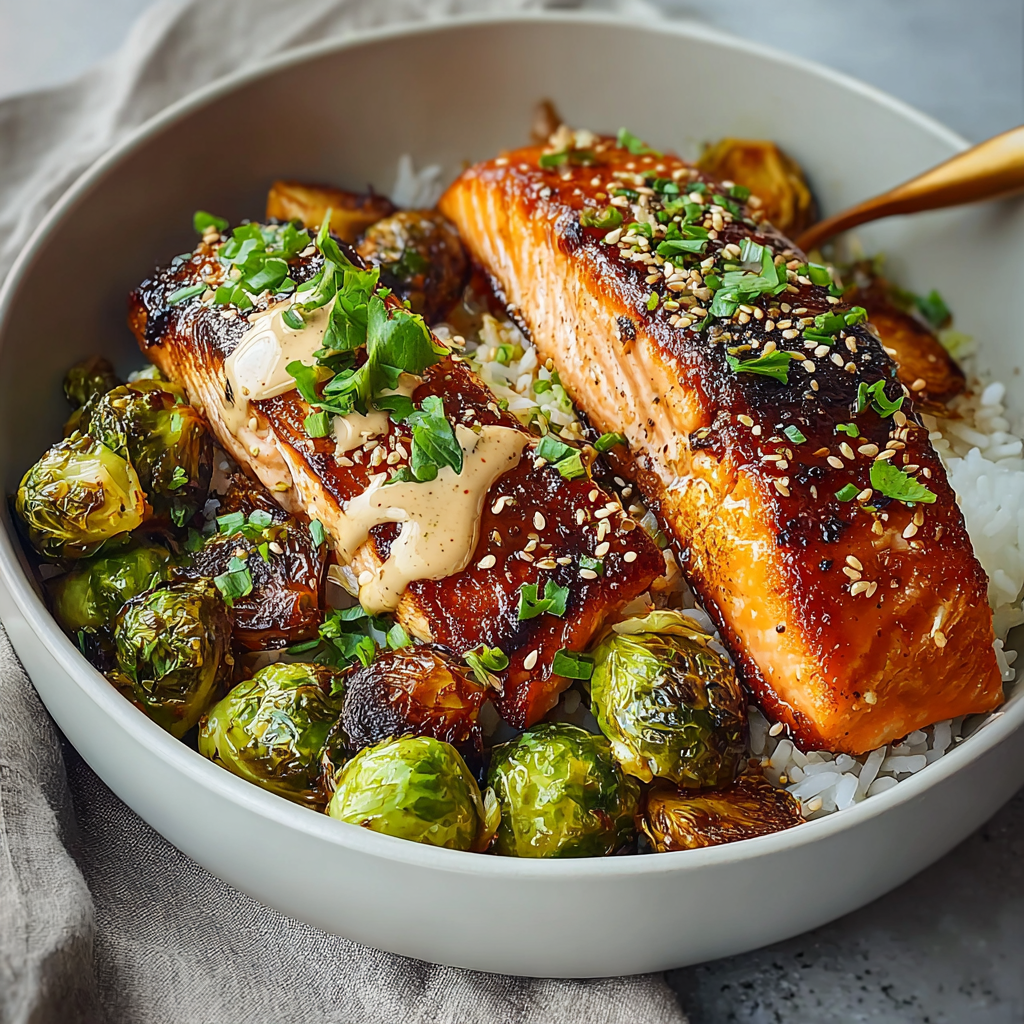
These teriyaki salmon bowls with crispy Brussels sprouts bring together a perfect balance of savory, sweet, and spicy flavors that brighten up any weeknight dinner. The golden roasted Brussels sprouts add a delightful crunch, while the tender salmon glazed in a homemade teriyaki sauce makes the dish feel special yet easy to prepare. This meal is great for family dinners or meal prep because it comes together efficiently and offers a healthy, dairy-free option packed with nutrients.
I remember making this during a hectic week, and the whole family couldn’t stop raving about how the crispy sprouts elevated the dish. It quickly became a favorite that I make almost every other week now.
Ingredients
- Salmon fillets: fresh and firm for a rich flaky texture
- Soy sauce: serves as a salty umami base in the marinade
- Honey: adds natural sweetness balancing the flavors
- Rice vinegar: brings a subtle acidity to brighten the glaze
- Grated ginger: infuses a fresh, warm spice note
- Garlic powder: offers savory depth
- Red pepper flakes: deliver just enough heat to awaken the palate
- Brussels sprouts: trimmed and halved for even roasting and crispness
- Olive oil: for coating the sprouts, helping achieve a caramelized finish
- Salt: to enhance natural flavors
- Black pepper: for a mild bite
- Mayonnaise: creates a creamy, smooth sauce base
- Dijon mustard: adds a tangy sharpness for balance
- Fresh lemon juice: brightens the sauce with citrus zing
Step-by-Step Instructions
- Make the Marinade:
- Begin by mixing soy sauce, honey, rice vinegar, grated ginger, garlic powder, and red pepper flakes in a small bowl. Stir until the honey dissolves fully and the mixture is well combined, creating a richly flavored teriyaki glaze.
- Marinate the Salmon:
- Place the fresh salmon fillets in a shallow dish. Pour the marinade over the salmon ensuring each piece is completely covered. Cover the dish and refrigerate for at least thirty minutes or up to two hours to allow the flavors to deeply penetrate the fish.
- Prepare the Brussels Sprouts:
- In a large bowl, drizzle olive oil over the trimmed and halved Brussels sprouts. Sprinkle with salt and black pepper, then toss to coat evenly. Spread the sprouts in a single layer on a baking sheet, which helps them roast uniformly and get crispy instead of soggy.
- Cook the Salmon and Brussels Sprouts:
- Preheat your grill or broiler to medium-high heat. Cook the salmon for five to seven minutes per side or until it easily flakes with a fork. At the same time, roast the Brussels sprouts in the oven for twenty to twenty-five minutes, flipping them halfway through to develop an even golden crust on all sides.
- Make the Sauce:
- In a small bowl, whisk together mayonnaise, Dijon mustard, honey, fresh lemon juice, and garlic powder. Blend until the sauce is smooth and creamy. Taste and adjust seasoning if needed to balance sweetness and tang as preferred.
- Assemble and Serve:
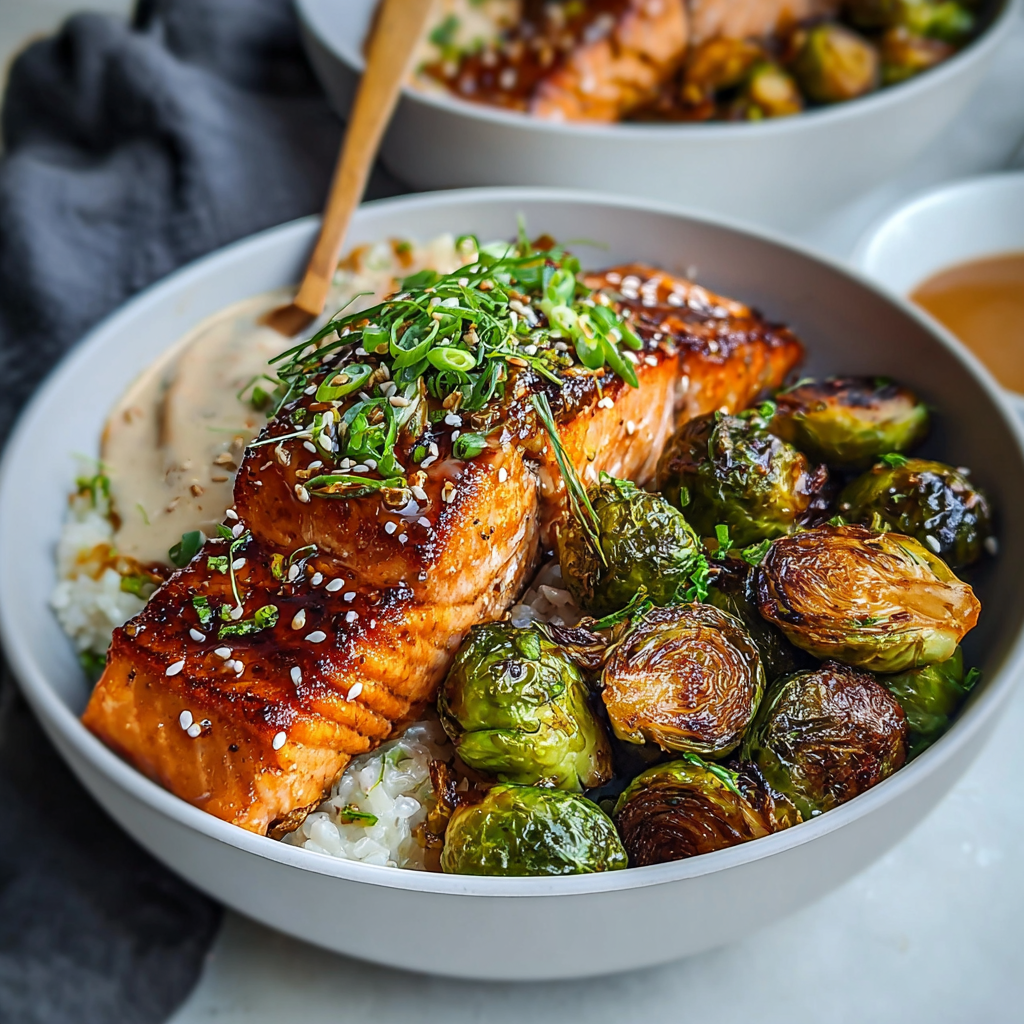
- Place a bed of rice or quinoa on each plate. Lay the grilled salmon atop the grains, then surround or top with the crispy Brussels sprouts. Generously drizzle your creamy sauce over everything. For a finishing touch, sprinkle toasted sesame seeds or freshly chopped herbs on top for enhanced flavor and presentation.
 Save Pin
My favorite ingredient has to be the Brussels sprouts. Watching them transform from simple green buds to crispy golden morsels always feels like magic. One family dinner, my picky eater who usually avoids vegetables asked for seconds, all thanks to the irresistible crunch and flavor.
Storage Tips
Store leftovers in airtight containers in the fridge for up to three days. Keep salmon, Brussels sprouts, and sauce separated to maintain texture and freshness. Reheat salmon gently in the oven to avoid drying it out, and warm Brussels sprouts in the oven or air fryer to bring back crispness. Prepare marinades and sauces day ahead to speed up meal prep. Avoid freezing assembled meals, but raw salmon and marinade freeze well if packaged properly.
Ingredient Substitutions
If Brussels sprouts are not available use broccoli, green beans, or asparagus for similar texture and flavor. Swap soy sauce with tamari or coconut aminos for a gluten-free option. Substitute mayonnaise with Greek yogurt or vegan mayo to adjust creaminess and dietary preferences. Try tempeh or tofu for a plant-based alternative that works beautifully with the marinade.
Serving Suggestions
Serve this bowl over steamed jasmine rice for a classic feel, brown rice or quinoa for extra fiber, or cauliflower rice for a low-carb twist. Top with toasted sesame seeds and green onions for color and added crunch. A squeeze of fresh lemon or lime juice brightens the dish just before eating. Pair with sides like garlic butter rice, steamed edamame, or a sesame ginger slaw for a fuller meal.
Cultural and Historical Context
Teriyaki originates from Japan and is traditionally made by grilling or broiling foods glazed in a soy-based sauce. The word teriyaki comes from “teri” meaning shine or luster, referring to the glaze’s glossy finish, and “yaki” meaning to grill or broil. Combining this technique with crispy Brussels sprouts gives a creative twist by adding a Western vegetable prepared to complement the Japanese-inspired salmon.
Pro Tips
- Make sure to marinate the salmon long enough, it really elevates the flavor
- Flip Brussels sprouts halfway and finish with a quick broil for ultimate crispness
- Avoid overcrowding the baking sheet so the sprouts roast instead of steam
Commonly Asked Questions
- → Can I use other vegetables instead of Brussels sprouts?
Yes, broccoli, green beans, or asparagus work well as substitutes and roast nicely with similar timings.
- → What’s the best base to serve with this dish?
Steamed jasmine rice is classic, but brown rice, quinoa, or cauliflower rice provide excellent alternatives to suit different preferences.
- → How do I ensure the salmon is cooked perfectly?
Cook until it flakes easily with a fork and reaches an internal temperature of 145°F (63°C) to maintain moist, tender flesh.
- → Can I make this gluten-free?
Absolutely. Substitute regular soy sauce with tamari or coconut aminos for a gluten-free friendly option.
- → How can I add more heat to the dish?
Increase the red pepper flakes in the marinade or mix some sriracha into the creamy sauce to adjust spice levels.
- → Is there a plant-based alternative for the main protein?
Firm tofu or tempeh can be used in place of salmon, marinated and cooked with the same method for a satisfying plant-based dish.